

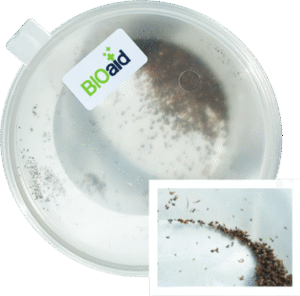
BIO-Kruszynek
Kruszynek (Trichogramma) is a natural, beneficial insect that effectively stops the development of harmful caterpillars by parasitizing their eggs. It is an ecological, safe and highly precise method of plant protection in fields, orchards and gardens.
BIO‑Kruszynek (Trichogramma) are tiny flying wasps (0.5–1.2 mm) that parasitize the eggs of insects attacking and damaging agricultural and garden crops.
They control most insect species that lay their eggs on plant surfaces. After emerging from the eggs, Trichogramma spreads within a radius of 15–20 meters from the release point, depending on weather conditions.
Trichogramma are parasitic insects that actively search for the eggs of other pests present in crops in order to lay their own eggs inside them. Adult insects feed exclusively on nectar. They perform best at temperatures between 10–25°C and in dry weather.
A single Trichogramma can eliminate up to 300 pest eggs, making it an effective and natural alternative to chemical insecticides — or a complementary method in cases of pesticide‑resistant pest variants.
They live for about 5–6 cycles (as long as pest eggs are available for parasitism) after release, without causing any permanent changes to the ecosystem.
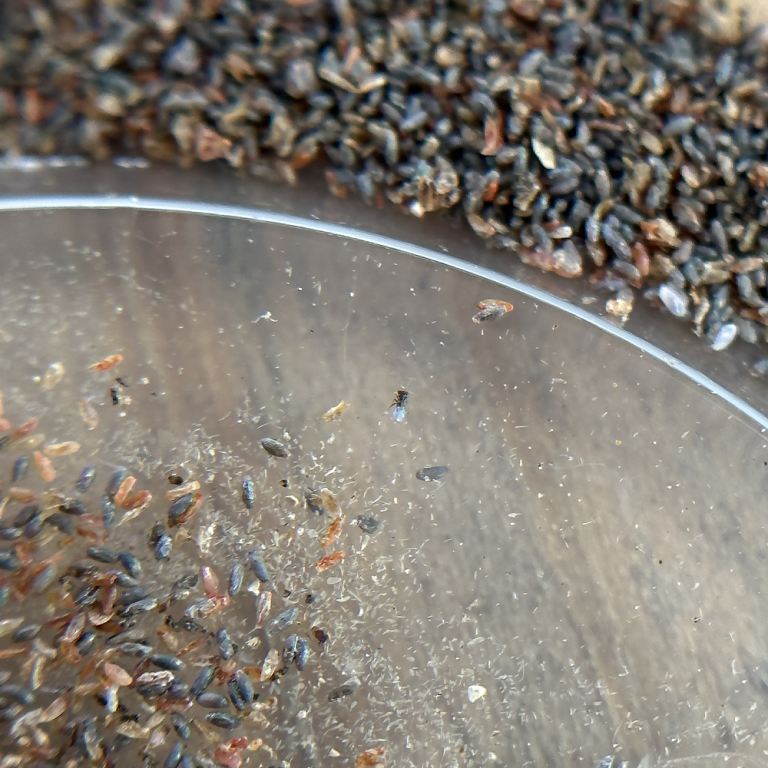
BIO‑Kruszynek is ideal for controlling, among others:
Field crops
- European corn borer (Ostrinia nubilalis)
- Cotton bollworm / Old World bollworm (Helicoverpa armigera)
- Corn earworm (Helicoverpa zea)
- Cabbage moth (Mamestra brassicae)
- Silver Y moth (Autographa gamma)
- Turnip moth (Agrotis segetum)
- Cutworms (Agrotis spp.)
- Armyworms (Spodoptera spp.)
Orchards and berry plantations
- Codling moth (Cydia pomonella)
- Plum fruit moth (Cydia funebrana)
- Pear fruit moth (Cydia pyrivora)
- Oriental fruit moth (Grapholita molesta)
- Summer fruit tortrix (Adoxophyes orana)
- Green budworm / Pandemis leafroller (Pandemis heparana)
- Rose tortrix (Archips rosana)
- Large fruit-tree tortrix (Archips podana)
- Brown fruit-tree tortrix (Archips xylosteana)
Vegetable crops
- Large white (Pieris brassicae)
- Small white (Pieris rapae)
- Diamondback moth (Plutella xylostella)
- Cabbage moth (Mamestra brassicae)
- Marbled clover (Heliothis viriplaca)
- Pea moth (Cydia nigricana)
- Tomato leafminer (Tuta absoluta)
- Armyworms (Spodoptera spp.)
Gardens
- Box tree moth (Cydalima perspectalis)
- Large yellow underwing (Noctua pronuba)
- Lesser yellow underwing (Noctua comes)
Forests
- Pine moth / Pine-tree lappet (Dendrolimus pini)
- Spongy moth (Lymantria dispar)
- Red pine moth (Panolis flammea)
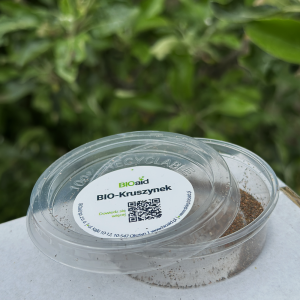
Available packaging
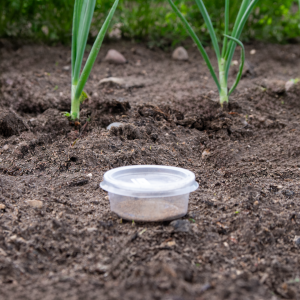
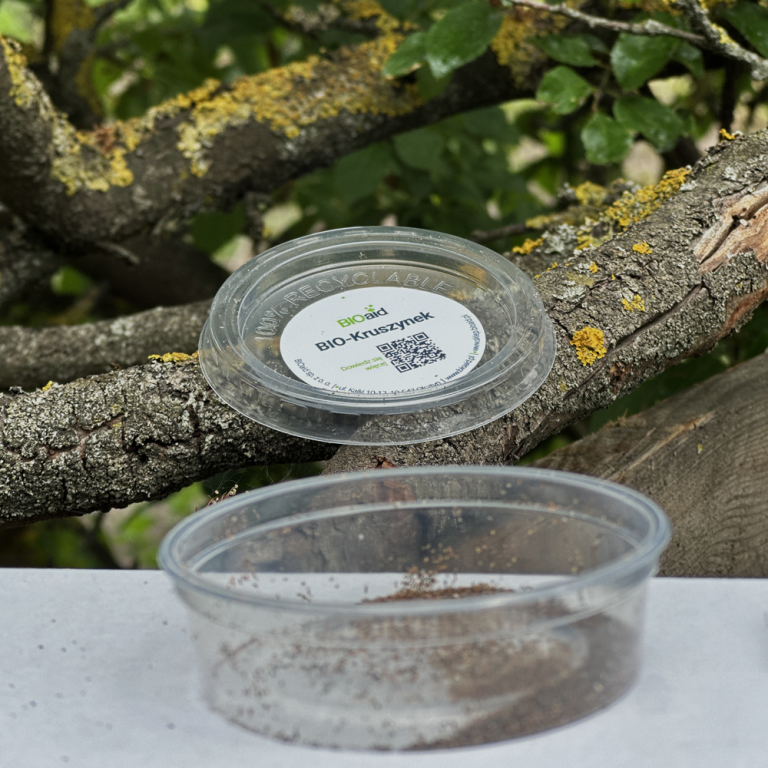
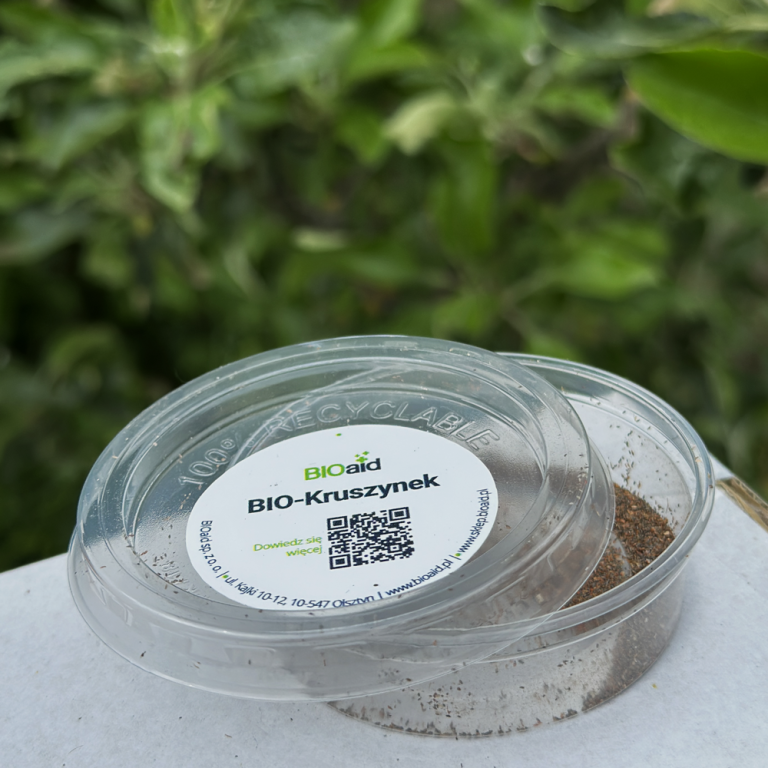
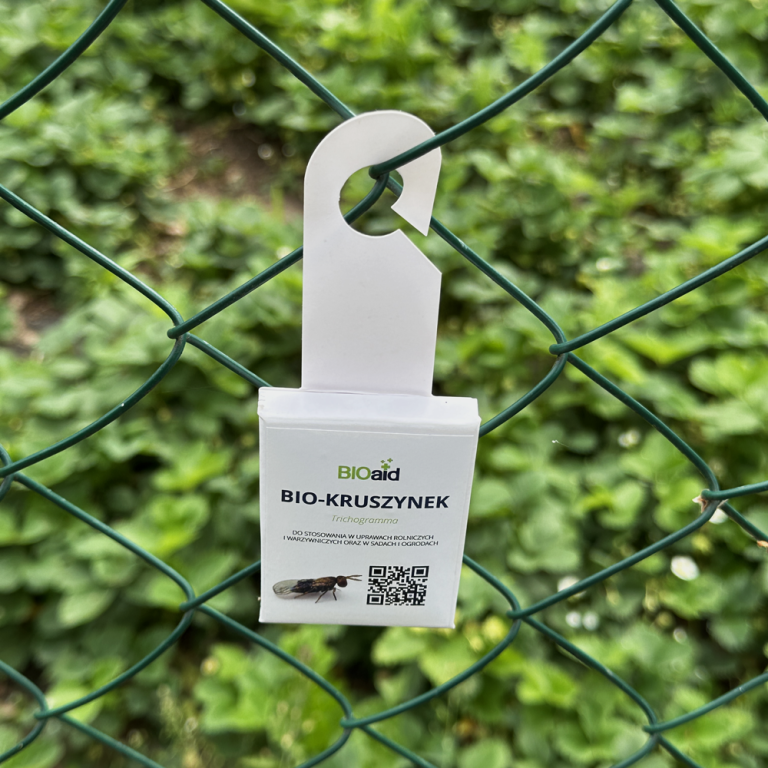
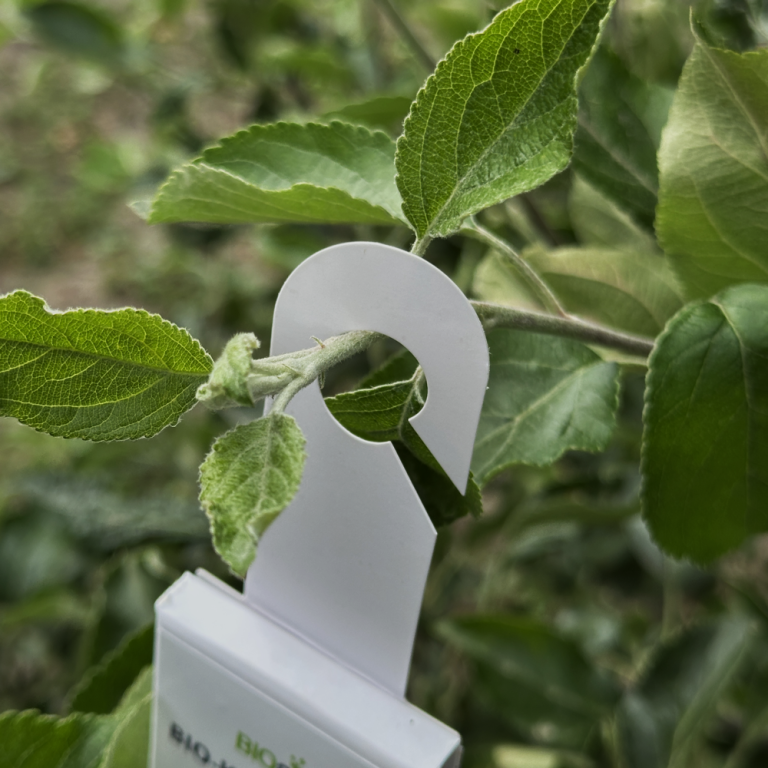
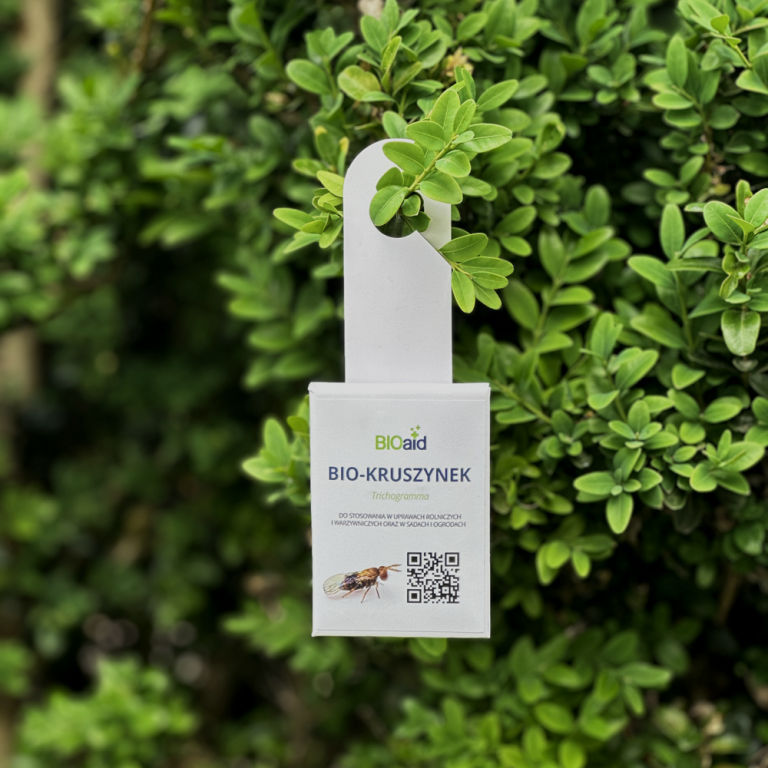
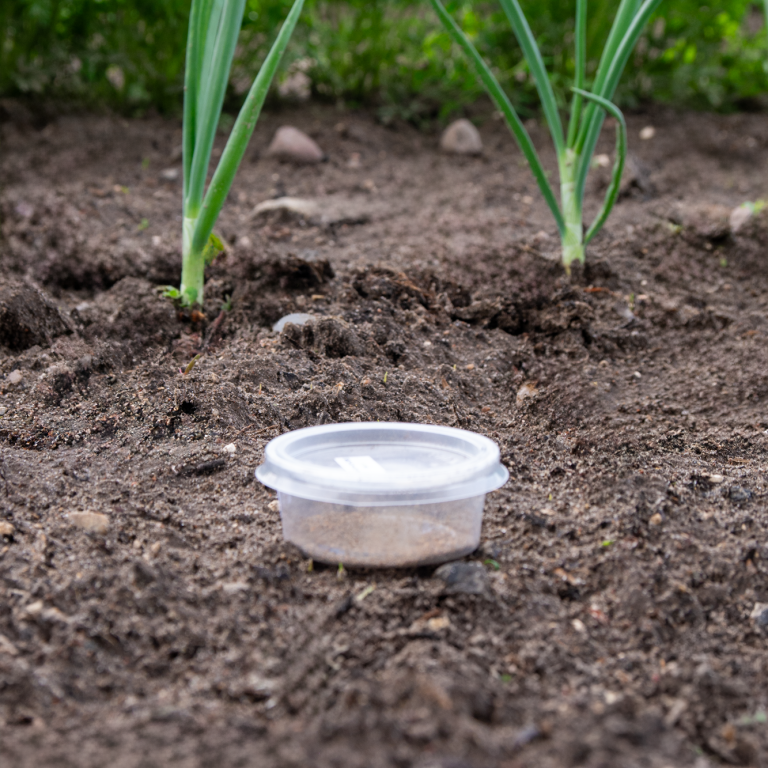
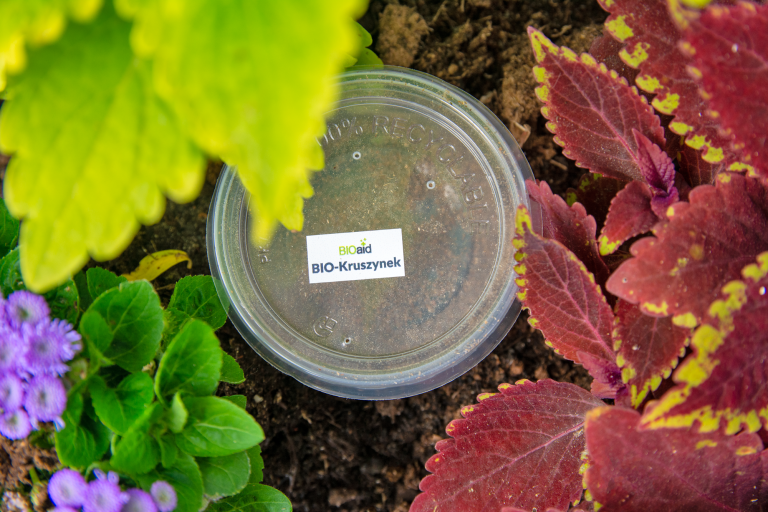
Is BIO‑Kruszynek safe?
Yes, it is safe for people, animals, plants, and the environment. It doesn’t bite or sting, and it does not permanently alter the ecosystem.
When should BIO‑Kruszynek be used?
The first BIO‑Kruszynek packages should be placed in May, when the first pest eggs appear. Subsequent applications are carried out in July and again in August or early September. The exact timing depends on the insect species you want to control and on the weather conditions in a given season.
What BIO‑Kruszynek packaging options are available and how should they be used?
There are currently four BIO‑Kruszynek variants available, depending on the protected area and the level of insect pressure:
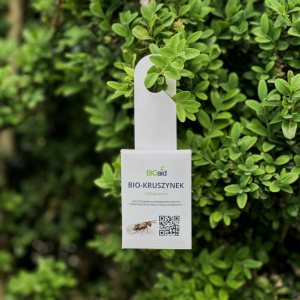
BIO‑Kruszynek – hanger — designed for areas of 100 m²
BIO‑Kruszynek – garden — designed for areas up to 300 m²
BIO‑Kruszynek 1.0 g/ha — for field crops, vegetables, and orchards. A package for 1 hectare contains 7 units, which should be distributed as evenly as possible across the area.
BIO‑Kruszynek 1.5 g/ha — for field crops, vegetables, and orchards, recommended for higher insect pressure. A package for 1 hectare also contains 7 units, to be distributed evenly.
What are the best conditions for using BIO‑Kruszynek?
BIO‑Kruszynek should be applied as soon as possible after receiving it to ensure maximum effectiveness. It is best used during dry weather, when no rainfall is expected for the next three days and both daytime and nighttime temperatures remain above 10°C. If rain is forecast, it is advisable to protect the hangers or capsules by creating a simple cover that shields them from precipitation.
How often should BIO‑Kruszynek be applied during the season?
We recommend applying BIO‑Kruszynek at least twice per season to effectively reduce pest populations. The optimal number of applications is three, which covers the entire egg‑laying period of the insects and ensures maximum effectiveness.
Can any sprays be used after applying BIO‑Kruszynek?
If you plan to use insecticides, you should wait 7 days after applying BIO‑Kruszynek.
However, you can use sprays containing Bacillus thuringiensis (e.g., BIO‑Bacthur, BtProtect), which act exclusively on insect larvae.
How do BIO‑Kruszynek parasitoids reduce insect populations?
BIO‑Kruszynek parasitizes the eggs of moths by laying its own eggs inside them. Instead of a caterpillar, another BIO‑Kruszynek emerges from the pest egg, stopping the development of the harmful insect at the earliest stage.
Is BIO‑Kruszynek effective against aphids, spider mites, or beetles?
No – BIO‑Kruszynek is not effective against aphids, spider mites, or beetles. It targets only the eggs of moths and butterflies.
Why choose BIO‑Kruszynek instead of chemical insecticides?
- It is safe for people, animals and the environment - it contains no chemical substances, leaves no residues and requires no withdrawal period.
- It prevents damage before it occurs - it stops pest development at the egg stage, before voracious caterpillars appear.
- It can be used in home gardens, allotments and professional crops - without the risk of contaminating produce or imposing restrictions on users.
- It does not disrupt the ecosystem - it supports natural biological balance instead of destroying it.
- It can be combined with biological methods -such as Bacillus thuringiensis products.
